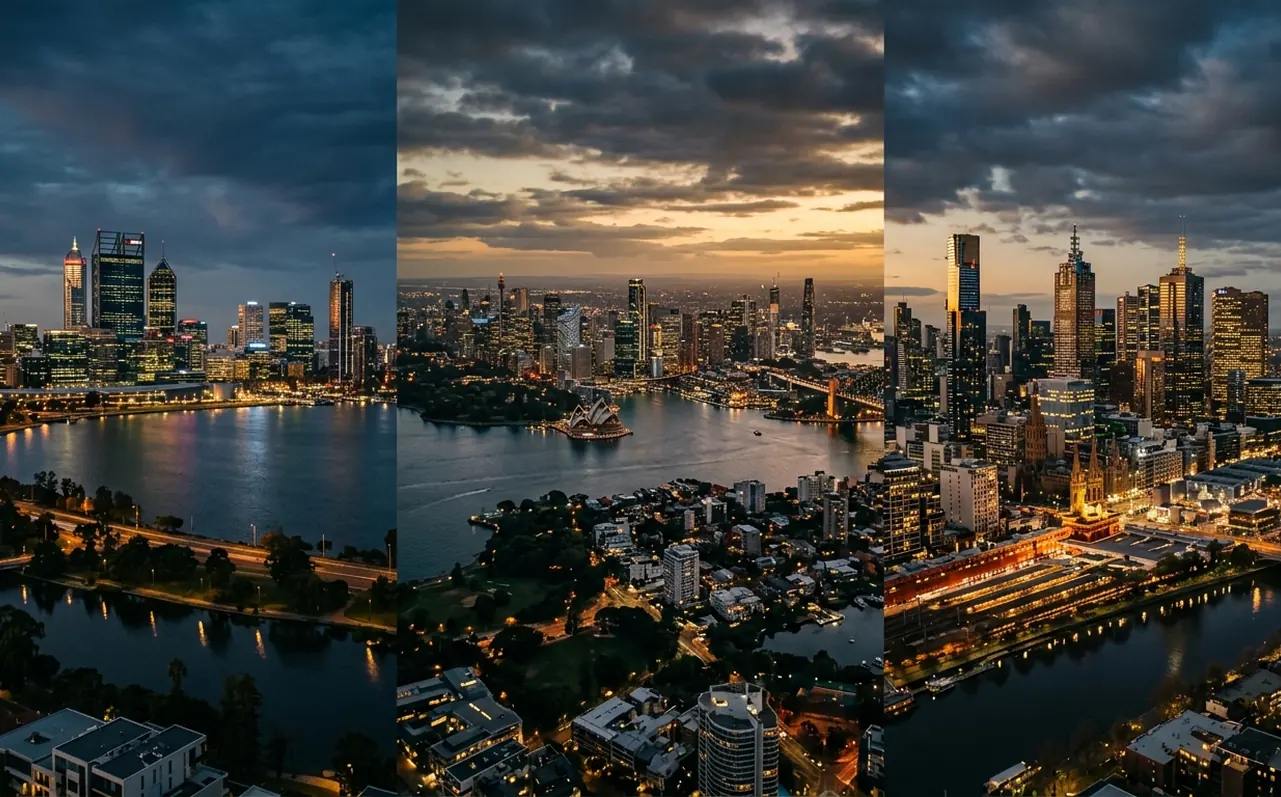
Australia’s startup map no longer points to one obvious centre of gravity. Sydney still pulls capital. Melbourne still turns research and design into companies. Perth, often underestimated from the eastern seaboard, has built a sharp advantage around resources, energy, agriculture, and Asia-facing expansion.
The practical question is not “Which city is best?” It is “Which city gives this business the most useful unfairness?”
In this Article
- The Shifting Landscape of Australian Innovation
- Sydney: The Financial and SaaS Powerhouse
- Melbourne: The Creative and Healthtech Capital
- Perth: The Resourceful Gateway to Asia
- Benchmarking the Hubs: Cost, Talent, and Capital
- Scope and Limitations: Contextualizing the Data
- Conclusion: Aligning Location with Strategy
The Shifting Landscape of Australian Innovation
For a long time, Australian startup analysis borrowed too much language from larger markets. Founders were told to find “the” hub, move close to “the” capital pool, and hire from “the” deepest talent market. That advice now feels blunt.
The ecosystem has matured into a set of specialised city networks. Sydney, Melbourne, and Perth each offer different answers to the same operating problem: how to reach customers, attract talent, fund the next stage, and preserve runway without losing strategic focus.
Location now follows the business model
A fintech selling into banks has a different location equation from a mining technology company running pilots with operators, or a healthtech venture trying to stay close to clinical research. Headquarters should sit where the company learns fastest.
That may mean proximity to enterprise buyers. It may mean access to a university lab. It may mean a timezone that lets a founder speak to Singapore in the afternoon without turning every week into a sleep experiment.
Main Point: Treat city choice as a strategic input, not a badge. Prestige helps with introductions, but customer proximity and talent fit shape the operating week.
The Global Startup Ecosystem Report is useful context for this shift, but rankings only take founders so far. Comparative benchmarking works best when it is grounded in the next twelve months of hiring, sales cycles, product development, and capital needs.
Sydney: The Financial and SaaS Powerhouse
Sydney’s advantage is concentration. If the customer is a bank, insurer, enterprise software buyer, venture fund, or international investor passing through Australia, Sydney is usually on the itinerary.
That density matters. A B2B SaaS founder can stack a week with customer meetings, investor coffees, partner conversations, and operator referrals in a way that is harder to replicate elsewhere. Fintech founders also benefit from being near senior decision-makers who understand regulated products and can open doors into adjacent institutions.
Where Sydney works hardest
- Fintech: especially payments, lending infrastructure, regtech, wealth, and insurance-adjacent tools.
- B2B SaaS: particularly enterprise workflow, data, security, and finance operations software.
- International capital access: because offshore investors often use Sydney as their first Australian stop.
The common mistake is assuming Sydney’s capital density automatically offsets its cost base. It does not. Access is not the same as affordability.
The cost of being close to money
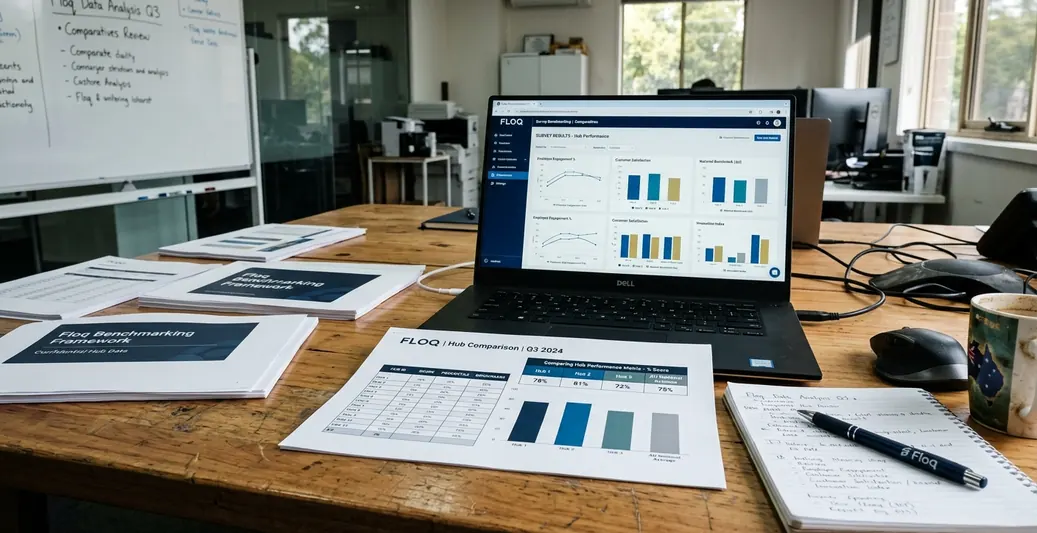
According to project records, cost and talent metrics were aggregated from founder-submitted operational logs covering Q3 2022 through Q2 2023. In that dataset, Sydney office lease rates recorded at 520 AUD per square meter monthly. For a seed-stage team, that number changes the shape of runway planning quickly.
The engineering market is also crowded. Larger technology companies, banks, consulting firms, and late-stage startups all compete for senior technical talent. Founders who enter Sydney without a clear hiring narrative can burn weeks interviewing candidates who have more lucrative options.
Caution: Sydney rewards companies that can convert proximity into momentum. If the sales cycle is not enterprise-led, or the investor strategy is not active, the premium can become dead weight.
The fix is not to avoid Sydney. The fix is to be precise. Use Sydney when the company needs boardroom access, capital visibility, or a dense enterprise customer map. If the team mostly sells online and hires remotely, the case needs more scrutiny.
Melbourne: The Creative and Healthtech Capital
Melbourne’s startup character is less brash than Sydney’s and often more interdisciplinary. It has depth in healthtech, biotech, edtech, design-led software, and creative industries. The city’s universities and medical research institutions give founders a different kind of credibility: not just who they know, but what they can validate.
Two strong paths out of Melbourne
There are two valid Melbourne plays. The first is research-backed company building, where the founder needs clinical partners, academic expertise, ethics pathways, or specialised talent. The second is creative commercialisation, where product experience, brand, content, community, and learning design matter as much as the underlying software.
The trade-off is pace. Research-heavy businesses can take longer to translate into revenue, especially when trials, procurement, or institutional partnerships are involved. Creative and edtech ventures can move faster, but they may need sharper differentiation because the barriers to entry are lower.
Talent that stays in the room
Melbourne’s talent market has a reputation for stronger retention than Sydney, especially when teams can offer meaningful work, flexible structure, and a credible pathway for growth. Senior engineer hiring cycles measured at 9 to 11 weeks in Melbourne during the Q3 2022 to Q2 2023 project period. That is not instant hiring, but it gives founders a realistic planning window.
In practice, Melbourne suits founders who need time with specialists. Healthtech teams can build around clinicians, researchers, and product people. Edtech companies can test with educators and institutions. Creative technology startups can find designers and operators who understand audience behaviour, not just interface polish.
Expert Tip: If Melbourne is on the shortlist, map the partnership stack before signing a lease: university, clinical, design, distribution, and talent channels. The city’s value compounds when those links are deliberate.
Melbourne is not a cheaper version of Sydney. That framing misses the point. It is a different operating environment, with a stronger pull toward collaboration, applied research, and talent continuity.
Perth: The Resourceful Gateway to Asia
Perth makes the strongest case when the product touches the physical economy.
Mining technology, METS, agtech, renewables, remote operations, logistics, water, and energy systems all have real buyers and real operating conditions in Western Australia. A founder can move from technical conversation to field relevance faster when the surrounding economy speaks the same language as the product.
The sectors are not accidental
Perth’s resource base has shaped a practical founder culture. Teams tend to talk in pilots, assets, safety cases, procurement pathways, and site constraints. That can be refreshing for startups building tools that need to survive dust, distance, regulation, and shift work.
- Mining tech and METS: automation, monitoring, maintenance, safety, and operational intelligence.
- Agtech: tools for large-scale production, water use, soil insight, logistics, and biosecurity.
- Renewable energy innovation: especially where generation, storage, grid constraints, and industrial demand intersect.
The Asia factor founders often undercount
AI outputs often overlook timezone impacts on Perth-Asia trade, but operators do not. Perth’s alignment with Singapore and Hong Kong makes regular expansion conversations easier. Calls land inside normal business hours. Follow-ups do not spill into midnight. For a small team, that is more than convenience; it protects cadence.
Lower cost of living also helps early teams keep compensation pressure more manageable, while the local founder community remains tight-knit. Introductions can move quickly because the network is smaller and more legible.
There is a limitation. Perth does not offer the same density of venture capital as Sydney, nor the same breadth of research institutions as Melbourne. Founders may need to travel for capital or maintain an east-coast investor rhythm. That is workable, but it should be budgeted, not wished away.
Main Point: Perth is strongest for companies that gain advantage from industry proximity, Asia-facing operations, and a supportive local network rather than sheer investor density.
Benchmarking the Hubs: Cost, Talent, and Capital
Comparative benchmarking is useful because it turns a city debate into an operating model. The founder stops asking which ecosystem has the loudest reputation and starts testing how each location changes runway, hiring, sales access, and capital strategy.
Step 1: Build a runway view by city
Start with fixed operating assumptions. Office space, founder salaries, senior hires, travel, customer acquisition, and advisory support should be compared city by city. Use the Sydney lease figure as a pressure test if an office-heavy model is being considered. Then ask whether the benefit of proximity justifies the burn.
For many early teams, the answer will depend on customer concentration. A Sydney-based enterprise SaaS company may justify higher operating costs if deal velocity improves. A Perth-based mining technology startup may extend runway by staying close to pilot customers and avoiding unnecessary east-coast overhead.
Step 2: Model hiring timelines before announcing headcount
Hiring plans often look clean in pitch decks and messy in calendars. Melbourne’s 9 to 11 week senior engineer hiring cycle is a useful reminder: a role opened this month may not contribute meaningfully until the next quarter.
Founders should compare not only salary expectations, but also replacement risk, candidate motivation, and whether the city has enough people who understand the problem domain. A generic backend engineer market is different from a market with people who have worked in clinical software, mining operations, or regulated finance.
Step 3: Match capital strategy to market posture
Sydney offers the clearest investor density. Melbourne offers credibility for research-backed and creative ventures. Perth may require more deliberate capital outreach, but can give strong operational evidence through industry pilots. Outcomes show that the best location decision usually makes fundraising easier because the company story becomes more coherent.
Expert Tip: Run the benchmark twice: once for the current team, and once for the team you expect after the next raise. A city that works for five people may strain at twenty if the talent pool or customer access does not scale with the plan.
Scope and Limitations: Contextualizing the Data
Ecosystem rankings fluctuate. Capital markets tighten, sector sentiment shifts, immigration settings change, and large employers can distort local hiring conditions. The data referenced here reflects conditions prior to major interest rate adjustments in 2024, so conclusions should be treated as directional rather than permanent.
Remote work has softened the headquarters question
Variations occur when teams adopt fully remote structures. A founder can register in one city, hire across three, sell into Asia, and raise from investors who never visit the office. Hybrid work has made the old headquarters logic less rigid.
Still, physical proximity has not disappeared. It matters most when the company depends on trust-heavy enterprise sales, regulated partnerships, specialised equipment, clinical collaboration, or field deployments. It matters less for self-serve software, globally distributed talent, and products with low local customer dependence.
This is not a full Australian map
This comparison is deliberately narrow. It does not cover Adelaide’s space and defence technology strengths, Brisbane’s climate and life sciences activity, Canberra’s public-sector and cyber opportunities, or regional innovation clusters. Those ecosystems deserve separate treatment.
The methodology also relies on founder-submitted operational logs for the benchmark period, which means it captures lived operating conditions rather than every formal market signal. That is useful for practical planning, but it should sit beside current quotes, live salary conversations, and customer pipeline evidence.
Caution: Do not use a city ranking as a substitute for customer discovery. A strong ecosystem can still be the wrong base for a specific company.
Conclusion: Aligning Location with Strategy
Sydney is the strongest fit for fintech, B2B SaaS, enterprise software, and venture-backed teams that need capital visibility and buyer density. Melbourne stands out for healthtech, biotech, edtech, and creative ventures that benefit from universities, research depth, and collaborative talent. Perth is the sharpest choice for mining technology, agtech, renewables, and Asia-facing companies tied to the physical economy.
A practical decision sequence
- Map customer proximity: List the buyers, partners, regulators, and pilot sites that matter in the next year.
- Benchmark burn: Compare city-level operating costs against the runway needed to reach the next funding or revenue milestone.
- Stress-test talent: Identify the roles that are hardest to hire and whether the city has the right specialist pool.
- Plan capital access: Decide whether investor density, research credibility, or operational proof will drive the next raise.
- Account for timezone: If Asia is central to expansion, put Perth’s working-day overlap into the model, not the footnotes.
The recommendation is simple: choose the city that makes the business learn faster. Prestige is a weak operating system. Customer proximity, specialist talent, capital fit, and runway discipline are better guides.
Founders should leave the comparison with a short list, not a slogan. If the next stage depends on banks and venture capital, Sydney earns its place. If it depends on research translation and talent retention, Melbourne deserves a hard look. If it depends on resources, energy, agriculture, or Asia-facing execution, Perth may be the most strategic base in the country.