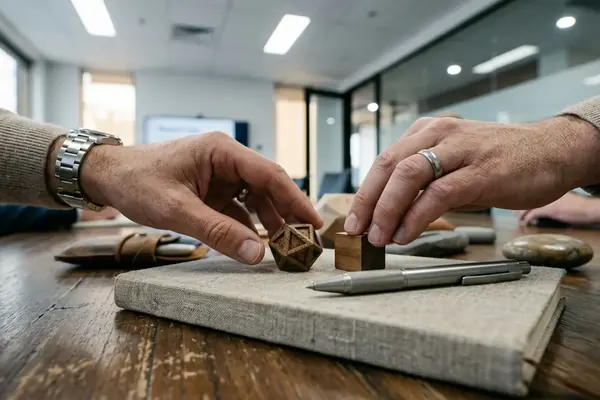
A reflective walkshop is a walking workshop: movement, environment, and structured reflection put to work in the same hour. Done well, it feels simple. Done poorly, it becomes a loose stroll with a few earnest questions bolted on.
The difference usually starts before anyone arrives. Route selection begins with mapping low-traffic paths against group mobility needs, then layering reflection prompts that suit the terrain rather than fight it. That is the field note I keep coming back to.
This is a hands-on tutorial for running one in Perth. Not a theory piece. By the end, you should have a repeatable process: choose the route, structure the prompts, facilitate the walk, and debrief without flattening the experience.
In this Article
- Why place-based reflection works.
- How to choose a Perth route that supports reflection.
- How to sequence prompts from observation to action.
- How to facilitate the walk without over-managing it.
- How to capture insight lightly at the end.
- What to watch in Perth weather, access, and group size.
Why Place-Based Reflection Works
The point is attention, not exercise
A walkshop works because the setting gives people something to think with. A path, a river bend, a change in shade, the sound of traffic fading behind you: these become anchors for reflection. People who struggle to answer a direct question in a boardroom often find words once their body has settled into a pace.
For facilitators, the appeal is practical. You do not need a venue, projector, catering schedule, or wall of sticky notes. For community hosts, it lowers the temperature of difficult conversations. For practitioners designing developmental experiences, it gives you a format that can be repeated and compared without feeling sterile.
Main Point: Treat the walkshop as a structured method, not a scenic detour. The route carries part of the facilitation load.
Perth gives you useful contrasts
Perth is good walkshop territory because the city offers several kinds of reflective environments within easy reach: bushland, river edge, coastal scrub, civic space, and quiet suburban loops. Each one changes the conversation.
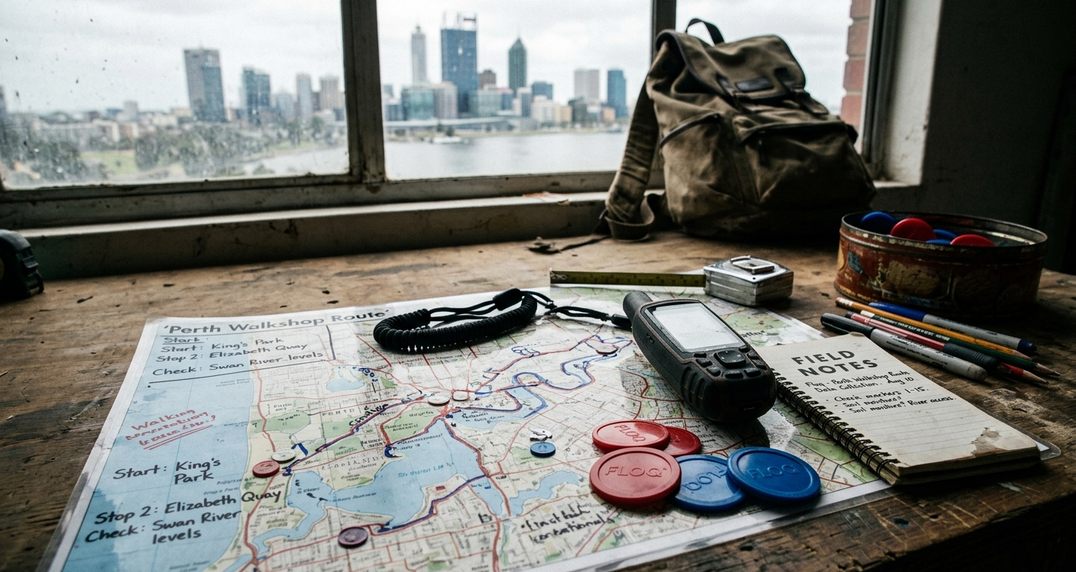
In practice, a shaded bush track tends to slow people down. A foreshore path can make action planning feel more public and forward-facing. A suburban river loop gives participants enough familiarity to relax, without the sensory load of a busy precinct.
One qualifier matters here: these notes come from route-level facilitation trials and project records, not a controlled study of learning outcomes. I use them as design guidance, not as universal rules.
Step 1: Choosing Your Perth Route
Start with the constraints
A good walkshop route is not necessarily the most beautiful one. It is the one that keeps attention intact.
- Low traffic noise: Participants should not have to raise their voices during paired walking or strain during the debrief.
- Natural pacing: The path should allow a steady rhythm without constant stopping, crossings, or bottlenecks.
- Safe footing: Uneven ground is fine only if the group knows about it and can manage it comfortably.
- Minimal interruptions: Avoid routes with frequent cyclists cutting through the group, narrow bridges, or crowded photo points.
- Clear gathering points: You need places where people can stop, hear the next prompt, and restart without confusion.
According to project records, the Kings Park loops used for this format measured roughly 2-3 km, with weekday morning scouting completed in about 50 minutes. That is a useful planning range: long enough to create separation from the everyday, short enough to keep the session contained.
Four Perth route options
Kings Park bushland trails suit grounding and personal reflection. The shade helps, and the change in texture from lookout to bush track gives you natural chapters. Check current access and facilities through Kings Park and Botanic Garden visitor information before locking the plan.
The Swan River foreshore at Elizabeth Quay works when you want a more civic feel. Foreshore sections reviewed for this format had around five benches per 800 m, which makes short pauses and accessibility planning easier. The trade-off is exposure: wind and pedestrian traffic can thin out the reflective mood.
Bold Park's coastal paths are better for spacious thinking and longer silent intervals. The planning notes put turnaround points 12-15 minutes apart, so the route needs firmer timekeeping. It suits groups comfortable with a little more physical effort.
A quiet suburban river loop can be the strongest choice for local community work. It feels less performative. People are not distracted by the feeling that they should be admiring a landmark.
Caution: Match terrain difficulty to the emotional intensity of your prompts. A steep or exposed path paired with heavy questions can make people manage the walk instead of the reflection.
Step 2: Structuring Your Reflective Prompts
Use a four-part arc
Do not open with the deepest question. People need to arrive first.
The prompt sequence I recommend moves from sensory observation to personal insight, then to action. It is simple enough to remember and strong enough to use across different routes.
- Notice your surroundings: What is drawing your attention right now?
- Connect to a current challenge: Where does this mirror something you are carrying in your work or life?
- Imagine a shift: What would change if you approached that challenge differently?
- Name one action: What is one small thing you will do after today?

Three to five prompts is plenty. More than that turns the walk into an outdoor questionnaire, and nobody needs that. Comparative benchmarking has the same lesson: consistency beats volume when you want meaningful comparisons across sessions.
Silence does the heavy lifting
The pilot loop used silent walking intervals of about 7 minutes. That length gave participants enough time to move beyond the first obvious answer without drifting too far from the question. Prompt cards were printed on heavier stock because Perth wind makes flimsy paper annoying fast.
Keep the wording open. Ask “what are you noticing?” rather than “what insight have you gained?” The second version pushes people toward performance. The first leaves room for a real answer.
Expert Tip: Read each prompt aloud, then repeat it once more slowly. People often hear the second reading differently, especially once they are outside and scanning the environment.
Step 3: Facilitating on the Day
Open at the trailhead
The first five minutes set the contract. Gather at the trailhead, explain the format, name the endpoint, and make the silence norms explicit. Tell people when they will walk alone, when they may speak, and how you will call the group back.
A useful opening sounds plain: “We will walk in silence for the first section. Stay within sight of the person ahead. When I raise my hand, finish your thought and gather at the next stopping point.” No theatre required.
The working pace for the tested format was around 3 km/h. Faster walking reduced recall of environmental details in prior trials, so resist the urge to keep the group moving briskly. This is not a fitness session with reflective garnish.
Choose solo or paired walking deliberately
Solo walking creates privacy. It suits prompts about uncertainty, identity, grief, values, or decision points. Paired walking creates social accountability and can work well for leadership groups, peer cohorts, and community hosts who already have trust in the room.
Paired walking was limited to groups under 8 in the facilitation notes. Beyond that, pairs spread out, transitions get ragged, and the facilitator starts managing logistics instead of attention.
Use a clear signal between prompts. A bell works if it is soft enough not to startle people. A hand raise is less intrusive; the tested version used a lead time of roughly 90 seconds so participants could close a thought before regrouping.
Step 4: Debriefing and Capturing Insight
Pick the endpoint before you pick the questions
The debrief needs comfort. Not luxury, just enough ease for people to stay with what surfaced during the walk.
Choose a café corner, park bench cluster, shaded lawn, or quiet public seating area. The endpoint in the project notes was selected after checking three candidate locations on the same day for seating density and ambient noise. That small scouting step matters more than it sounds.
If people arrive at a loud, exposed, or cramped endpoint, they start editing themselves. They speak shorter. They reach for safe summaries. The better endpoint keeps the reflective mood alive for another 20 minutes.
Use a structured round
I like three questions because they are easy to hold after walking:
- What did you notice?
- What surprised you?
- What will you carry forward?
Keep the round tight. Do not let the first speaker set a ten-minute precedent. Voice memos, if you use them, should stay under 90 seconds each. A shared notebook can move around the circle at roughly 4-minute intervals, which gives people a way to contribute without turning the debrief into a transcript exercise.
Main Point: Capture insight lightly. The aim is to preserve the reflection, not pin it down until it stops breathing.
Practical Considerations and Limitations
Weather is a design variable
Perth weather can make or break the session. Hot summers flatten attention. Wet winter paths can change access overnight. Weather windows were narrowed to March-May and September-November using Bureau of Meteorology humidity records, which fits the practical reality of keeping people comfortable outside.
Morning sessions are usually safer in warm months. Shoulder seasons give you more margin. On exposed river paths, walkshops lose effectiveness when wind exceeds about 25 km/h because participants manage hats, papers, hair, and hearing instead of the prompt.
One hard limit: river loops can become inaccessible after roughly 18 mm of overnight rain. Have a backup route or a backup date, and tell participants that the route may change.
Access and group size need honesty
Not all routes suit all bodies. Say what the terrain involves: distance, shade, surfaces, toilets, seating, gradients, and likely pace. Offer alternatives where possible. If the route has steps, loose gravel, or long exposed sections, do not bury that information in a reminder email the night before.
The group-size sweet spot is roughly 4-12, but I would cap most reflective walkshops at 11. A 14-person test produced average wait times of around 22 minutes at prompt transitions, and prompt recall drops when groups exceed 12 because people reach gathering points at staggered times.
Large groups can still walk together, but they do not reflect together in the same way. Split them into smaller cohorts if the work matters.
Bringing It All Together
A repeatable four-step process
The method is not complicated. Choose a route that protects attention. Sequence prompts from observation to action. Facilitate pace, silence, and transitions. Debrief somewhere comfortable and capture only what needs capturing.
The full sequence was repeated with two separate groups before the steps were documented. The first repeat took a little over 2 hours. The second kept the structure but adjusted turnaround points by about 150 m, which is exactly the kind of small route correction that makes a walkshop feel considered rather than improvised.
Start small
Run your first Perth walkshop with a trusted group. Four or five people is enough. Scout the route on the same day of the week and at the same time you plan to facilitate it, because a quiet path on Tuesday morning can become a different animal on Saturday afternoon.
Once the format settles, it becomes a low-cost developmental tool for teams, community groups, founders, educators, and peer networks. Not every conversation needs a room. Some need a path, a prompt, and enough quiet for people to hear themselves think.