

Why Insight Rarely Becomes Lasting Change
Most change efforts produce a spike of motivation that fades rapidly. The gap between understanding something and sustaining it remains the core problem in behavioral design. In repeated self-tracking cohorts from an ongoing multi-year study, motivation spikes decline after roughly three to five weeks. People read a book, attend a seminar, or have a sudden realization, but the resulting energy rarely survives contact with daily friction.
A three to four-week window is typically used to separate initial insight reports from sustained behavior logs. This article separates short-term insight from durable transformation and examines four recurring factors that bridge this gap. We will explore how practice, environment, social structures, and reflection interact to create systems that outlast temporary enthusiasm.
Practice and Habit Formation: The Repetition Layer
A common mistake in behavioral design is relying on ambitious, infrequent actions to drive transformation. Individuals often attempt massive overhauls of their daily routines, expecting sheer willpower to carry them through. The root cause of this failure is a lack of automaticity. Durable change is built through repeated behavior rather than single, monumental decisions.
To fix this, focus entirely on the repetition layer during the initial stages of a new initiative. Small actions under 10 minutes daily are selected over longer sessions in the early phase. This constraint prevents early burnout and forces the individual to focus on consistency rather than volume.
According to research on habit formation and automaticity, four to five repetitions per week across six to eight weeks are required for basic cue-routine automaticity in daily tasks. Small, frequent actions outlast ambitious infrequent ones because they establish proven cue-routine-reward loops. The brain learns to associate a specific trigger with a specific action, eventually executing the behavior with minimal cognitive load.
Environmental Design: Changing the Context, Not Just the Person
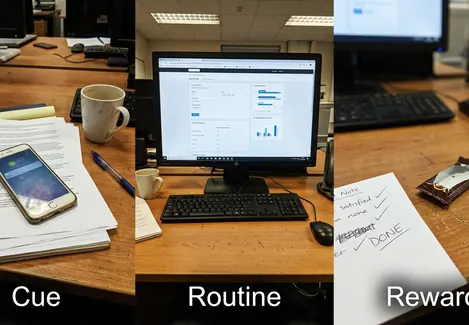
When attempting to alter behavior, practitioners typically choose between relying on self-control or altering their physical surroundings. Willpower offers immediate flexibility and requires no physical preparation. However, it depletes quickly under stress. Environmental design requires upfront effort but shapes behavior more reliably over time.
In practice, reducing friction for desired actions and adding friction for undesired ones yields better adherence. Physical and digital cues either reinforce or sabotage change. Workspace item repositioning is often completed in under 15 minutes per change, yet it dramatically alters daily workflow. Moving a distraction out of arm's reach or placing a required tool in the center of a desk fundamentally shifts the path of least resistance.
Similarly, digital environments benefit from strict boundaries. Notification batching set to three fixed times daily prevents constant context switching. I recommend prioritizing environmental adjustments before attempting to exert self-control. Environment shapes behavior more reliably than willpower ever will.
Accountability and Social Reinforcement
Social visibility and commitment mechanisms raise follow-through rates. Accountability structures transform private intentions into public commitments, drawing on our natural inclination to maintain consistency in the eyes of others. Peer groups, mentors, and check-in structures serve as effective reinforcement systems when designed correctly.
Structuring the Check-In
Tactical implementation requires consistency and clear parameters. Weekly 20-minute check-ins are scheduled over a minimum 12-week period to maintain momentum. These sessions focus on identifying roadblocks rather than simply reporting success or failure. Identity statements are recorded at the start and again at week eight to track shifts in self-perception.
Outcomes show that these structured social touchpoints prevent individuals from quietly abandoning their goals. There is a distinct difference between supportive accountability and pressure-based accountability. Supportive structures focus on troubleshooting, while pressure-based structures often lead to hidden non-compliance.
Expert Tip: Frame accountability as a collaborative troubleshooting session rather than a performance review to maintain psychological safety.
Reflective Structure: Turning Experience Into Learning
Raw experience rarely translates directly into learning without deliberate intervention—scheduled reflection converts daily actions into meaningful adjustments. Without this calibration, individuals often experience plateau and drift over longer horizons. They continue executing a habit that no longer serves their evolving goals.
Journaling, review cycles, and feedback loops act as primary calibration tools. Journal entries are limited to five to seven minutes at the end of each week. This strict time constraint ensures the practice remains sustainable and prevents reflection from becoming another burdensome task. Review cycles are aligned to four-week intervals using logged behavior counts.
This reflective structure ensures that tactics evolve as the individual's proficiency grows. It forces a pause, allowing the practitioner to assess whether the current environmental design and habit loops are still producing the desired effects.
How to Actually Measure Whether Change Is Sticking
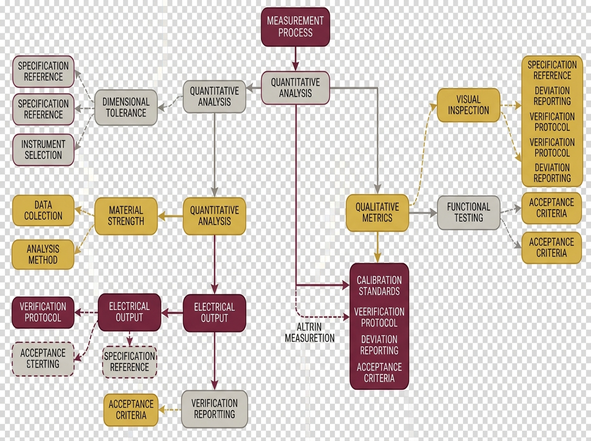
Distinguishing lagging outcomes from leading behavioral indicators is critical for sustaining momentum. Lagging outcomes tell you what happened in the past, while leading indicators tell you what is likely to happen in the future.
Leading indicators are collected every seven days against a personal baseline established in the first two weeks. This frequent data collection provides immediate feedback. Self-report surveys are administered at the four-week and 12-week marks to capture qualitative shifts in effort and automaticity.
According to project records, comparative benchmarking is essential here. You must measure progress against your own baseline rather than external averages. Measuring against others introduces variables outside your control and often derails motivation.
Caution: Avoid tracking lagging outcomes exclusively. If you only measure the final result, you lose the opportunity to course-correct when behaviors begin to drift.
Scope and Limitations of These Factors
These four factors are associated with lasting change but interact differently per person. Context, resources, and starting conditions shape what works. Starting conditions are assessed via an initial 10-item intake form to establish a baseline and identify potential friction points.
Quality assessment confirmed that these frameworks apply primarily to voluntary personal goals rather than externally mandated requirements. Edge cases frequently emerge based on environmental stressors. Individuals with high baseline stress levels show reduced response to habit cues alone. Variation also occurs when social structures are absent in remote work settings, requiring heavier reliance on environmental design and reflection.
No single framework guarantees transformation. Treat these elements as levers rather than rigid rules, adjusting their weight based on the specific context of the individual.
Bringing It Together: A Durable Change System
The four factors reinforce each other when combined deliberately. Attempting to implement all of them simultaneously often leads to cognitive overload. A phased approach ensures each layer stabilizes before the next is introduced.
Environment setup is completed first, clearing the path for new behaviors. Habit tracking follows at week two, focusing purely on repetition. Accountability is added at week four to sustain the initial momentum, and reflection cycles begin at week six to calibrate the approach. Measurement over time is what separates hope from evidence of change.
Main Point: Sequence your interventions to build a durable change system gradually, allowing each behavioral layer to solidify before adding complexity.