
The Floq Team: Research Experts Behind the Platform
Meet the research, methodology, analytics, and ecosystem specialists shaping Floq’s survey intelligence platform.
The Disciplines Behind Floq
Floq sits in a practical middle ground: rigorous enough for serious research, fast enough for teams that need to make decisions this quarter.
The platform draws from organizational psychology, Integral Theory, survey design, quantitative analysis, benchmarking, and market ecosystem research. Those disciplines sound neat on paper. In product work, they usually overlap. A question written for founders affects response quality. A benchmark model affects how an ecosystem is described. A dashboard label can change what a team believes the data is saying.
That is why our team is not built around one research function. It is built around the handoffs between functions.
One Team, Five Specialisms
Floq’s team covers five distinct specialisms. Research strategy sets the purpose. Quantitative analysis tests whether the numbers hold up. Survey architecture keeps instruments usable. Ecosystem research adds market context. Benchmarking methodology makes comparisons fair enough to be useful.
None of these roles works in isolation. A benchmark without good survey design is fragile. A beautiful survey without analytic discipline produces tidy noise. Ecosystem reporting without cultural context can flatten important differences between founders, markets, and operating conditions.
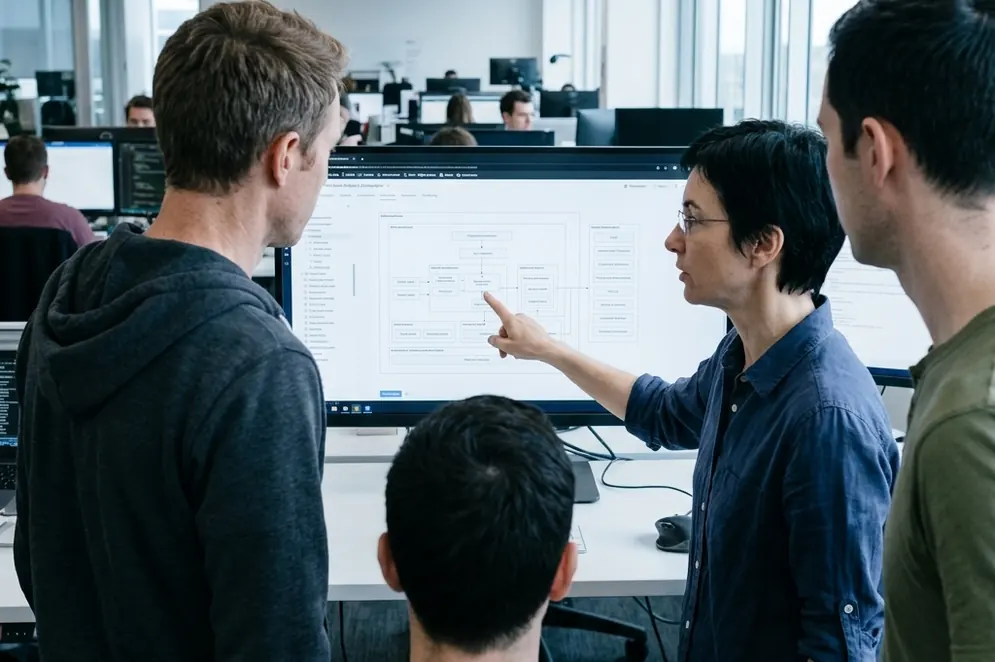
Research strategy
Frames the problem before a survey is built, so the work answers a real decision rather than a vague curiosity.
Measurement quality
Checks whether questions, scales, and models can support the conclusions teams want to draw from them.
Ecosystem context
Connects individual responses to the wider startup environment, including sector patterns and funding conditions.
Research Strategy Lead
Research strategy starts with restraint: deciding what not to ask, what not to claim, and what decision the work should support.
At Floq, that work is led by Dr. Bronwyn Marlowe. Her role bridges academic rigor and commercial agility, which matters when a founder, investor, policy team, or ecosystem builder needs insight without waiting for a twelve-month study cycle.
Dr. Bronwyn Marlowe
Senior UX Research Strategist
Dr. Bronwyn Marlowe bridges the gap between academic rigor and commercial agility to drive product growth.
Her field of view is deliberately broad. She looks at respondent experience, study intent, product implications, and how findings will be used once they leave the dashboard. That last part is often where research goes sideways. A clean chart can still lead to a poor decision if the original question was lazy.
Methodology & Analytics Specialists
Two kinds of discipline keep survey data from becoming decoration: statistical care and instrument design. Elias Mansour and Lachlan Vance work on those sides of the system.
Elias focuses on psychometrics and behavioral modeling. His work helps Floq treat data integrity as a design requirement, not a cleanup task. Lachlan focuses on standardized survey methodologies, especially the trade-off between data granularity and respondent fatigue. More detail is not always better. Sometimes the best question is the one you remove.

Elias Mansour
Quantitative Insights Analyst
Elias specializes in the mathematical foundations of psychometrics and behavioral modeling to ensure data integrity.

Lachlan Vance
Survey Design Architect
Lachlan develops standardized methodologies to maximize data granularity while minimizing respondent fatigue.
Their work shows up in small product choices: scale construction, response options, validation rules, sampling prompts, and the way findings are grouped. If you read more in our Survey Design guides, you will see the same bias toward practical measurement rather than question banks for their own sake.
Ecosystem & Benchmarking Leads
A startup benchmark is only useful if the comparison group makes sense.
That sounds obvious until you start comparing companies across regions, stages, sectors, funding models, and founder backgrounds. Siobhan O’Reilly and Teuila Fa’amausili bring different but connected lenses to that problem.
Siobhan O’Reilly
Market Ecosystem Lead
Siobhan transforms raw industry data into strategic narratives for the Australian startup ecosystem.

Teuila Fa’amausili
Benchmarking Methodology Lead
Teuila applies cross-cultural research to help startups measure performance against rigorous global standards.
Siobhan works close to ecosystem interpretation: what raw industry data means in the Australian startup context, and where a pattern may reflect market structure rather than founder behavior. Teuila’s benchmarking work adds cross-cultural caution. A metric that travels well in one market can become blunt in another if the surrounding conditions are ignored.
Together, that keeps Floq’s Benchmarking work grounded in comparison, not imitation.
How Our Expertise Shapes the Platform
Floq is not a research consultancy pasted onto software. The team’s expertise is built into product decisions: how surveys are structured, how benchmarks are framed, how segments are explained, and how much confidence a user should place in a result.
Before data collection
We focus on question intent, respondent burden, sample fit, and whether the study design can answer the decision at hand.
After responses arrive
We look for interpretation risks: thin segments, misleading averages, weak comparisons, and labels that may sound more certain than the data allows.
That second step matters. Many survey tools stop at collection. Floq puts pressure on interpretation because that is where teams often move too fast. A founder may need direction, not a lecture. Still, the platform should make uncertainty visible when the evidence is light.
Where Our Expertise Applies (and Where It Doesn't)
Floq is strongest when teams need structured insight about startups, ecosystems, customers, and organizational signals.
Our methods fit survey programs, benchmark studies, ecosystem reporting, founder research, and customer insight projects where consistency matters. They are less suited to problems that require clinical assessment, legal determination, or deep ethnographic immersion over long periods.
That boundary is intentional. Our strongest evidence comes from startup and ecosystem research, not every type of enterprise study. We would rather state the edge of the method than stretch a claim until it breaks.
If you are deciding whether Floq fits a specific research problem, the useful question is simple: do you need comparable, well-structured evidence that can support a decision soon? If yes, our team’s mix of strategy, measurement, analytics, ecosystem interpretation, and benchmarking is built for that job.