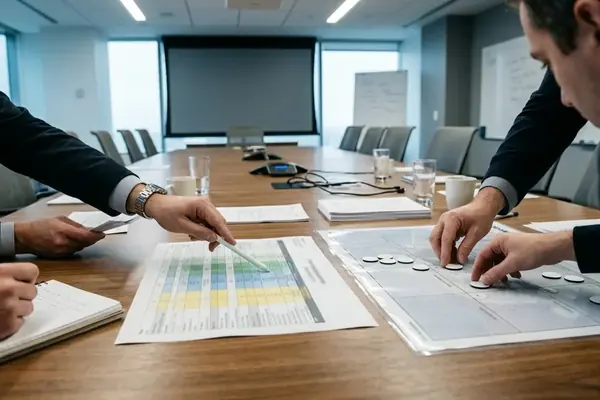
The Hidden Tax of Dormant Feedback Channels
A renewal invoice for a survey platform often masks a deeper operational failure. Tracing a software renewal back to actual fieldwork reveals a stark reality for many product organizations. A licence that fields a single tracker once per 12-month cycle leaves roadmap decisions running on signal that is already 9–12 months old by the time anyone opens the file. The concrete losses manifest directly on the product calendar. Product teams end up arguing price changes from hallway stories. Churn patterns surface, in our experience roughly 8–13 weeks after the underlying shift, usually noticed only after the following billing cycle. A UX tweak ships with no baseline wave to measure against.
The root of this lag traces back to the January research-plan cadence that never inherited a seat in the fortnightly retro. Consequently, the five-question post-release pulse has nowhere to be read. Teams that read a light pulse in the same standing meeting each month keep the lag inside that meeting’s 30–45 minute slot. This rhythm is particularly critical for product, UX, and insights groups of 5–50 people. In these environments, one unused seat is still a named line on a card, and the readout still has to fit an existing meeting.
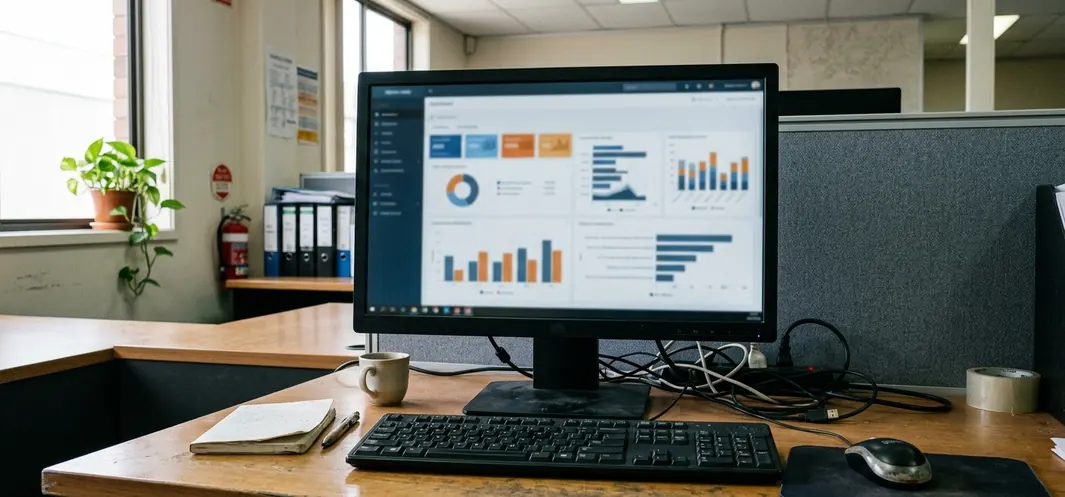
Why Capability Matrices Fail the Tuesday Morning Test
Vendor comparison sheets reward breadth. Procurement teams tally conjoint modules, catalogues of around 40 question types, and unlimited logic branches. These breadth items survive on the spreadsheet and vanish in actual use. Most product and UX groups touch these advanced modules once per programme year. They spend the remaining 10–11 months on short pulses and a handful of reused question blocks.
The real adoption question asks who opens this tool on a normal Tuesday and what they are trying to finish before lunch. Time-to-field that fits a Tuesday rhythm sits, on a typical engagement, in the 3–9 hour range from a written prompt to a live link. Sprint-length setup kills weekly and fortnightly pulses. Templates and reusable question blocks serve as the mechanism that makes this rapid cadence survivable. A five-question post-release pulse timed to a retro every 10–14 days arrives with a room already in the calendar. Quarterly relationship checks sit on a 12–14 week spacing alongside that pulse.
The tell for a bad fit is a single publisher. The platform collapses into one person's tool. When that person takes a week or two of leave, nothing fields and nothing is read. Heavily regulated research such as clinical protocols and government tender work still has to screen for named compliance features first; operational fit is the tiebreaker after that screen.
Operational Friction: Securing Team-Wide Questionnaire Access
Permission design acts as a primary adoption lever. Questionnaires often bounce through emailed documents with no trail. A comment left on a question stem inside the tool is recoverable months later. The same change in a circulated document is usually lost within a couple of review cycles. Wording changes require a visible history. Version history matters because when a tracker's wording changes silently, the trend line quietly becomes meaningless.

Roles must be split deliberately. View-only access serves stakeholders, drafting rights belong to product managers, and publishing is held by whoever owns methodology. Read-only seats priced as extra heads train stakeholders to wait for a forwarded export. This leaves last quarter’s tracker wording unaudited when the scale labels quietly move. If a non-researcher colleague cannot add a comment in an unattended 10–20 minute pass during the trial, publishing will stay stuck on one person after go-live.
Securing Wave-Over-Wave Comparability
Teams frequently try to fix a broken trend in the report layer. Comparative benchmarking is a design decision made at question-writing time. A tracker remains comparable across quarters only when the stem, scale points, and labels are unchanged. The field window must be stored with the responses. This is typically a 5–12 day collection window per wave, dated accurately.
Any comparison that does not disclose sample composition and collection window should be treated as directional. Internal wave-over-wave and segment-over-segment reads ask for different caveats than external pool comparisons. Internal reads still need those two facts even when no external pool is involved. On data interpretation more generally, the Australian Bureau of Statistics guidance on understanding statistics sets out a workable framework.
Shrinking the Gap Between Fieldwork and Backlog
Reporting habits determine whether survey data influences product direction. Decision velocity measures the working days from fieldwork close to a documented decision or backlog change. Velocity that sticks sits, per usual scope, in the 2–5 working day range. Past 8–10 working days, the wave is already competing with the next fire.

Scheduled readouts outperform live dashboards. A standing readout of 20–30 minutes with the same four-part spine each wave—headline movement, segment splits, verbatims, and next steps—is opened more often than an always-on dashboard with no owner. A monthly pulse read once outperforms a weekly send that is never opened. Verbatim handling requires simplicity. Quick tagging beats sophisticated sentiment models nobody will defend in a retro.
The Two-Week Operational Trial Protocol
Never buy survey software based on a vendor demonstration. Demos exclude real audiences and existing meetings. Run a genuine operational trial across 10–14 calendar days. This duration ensures the test includes at least one standing meeting and a real field window.
Draft the questionnaire directly in the tool. Send it to one non-researcher for review. Field it to people you actually need answers from. Present the results in a meeting that already exists and log the decision that followed. Record the hours to field, unprompted logins, and whether the readout happened on the booked day. Zero opens outside the person running the trial is a hard stop. Commit to a platform only when it has proven it can survive your team's actual working rhythm.