

In this Article
- Why These Seven Ideas Matter
- 1. Growth Is Vertical, Not Just Horizontal
- 2. People Are Not Problems to Be Fixed
- 3. The System Shapes the Behaviour
- 4. Change Needs a Holding Environment
- 5. Reflection Is a Skill, Not a Pause
- 6. Measure, But Know What Measurement Misses
- 7. Meaningful Change Is Slow and Non-Linear
Why These Seven Ideas Matter
Mapping audience survey patterns against generic frameworks rarely survives contact with real teams. In practice, responses gathered across roughly three months in 2023 highlighted a distinct gap between what organizations expect from their people and how those people actually develop. This piece serves as a personal reflection on bridging that gap.
Developmental practice involves working with individuals, groups, and systems to expand their capacity to handle complexity. It is not about enforcing compliance. Outcomes shift when team size exceeds about 15 or drops below five, making this approach highly sensitive to group dynamics. The methods discussed here fit repeated client cycles rather than single, isolated workshops.
Here are seven ideas that shape this work, paired with how they operate in the field.
1. Growth Is Vertical, Not Just Horizontal
Organizations default to horizontal growth. They add new skills, new software proficiencies, and new compliance certificates to an employee's repertoire. Vertical growth is entirely different.
Vertical development shifts how someone makes sense of the world. It changes their underlying operating system rather than just adding new applications. According to project records, a distinct shift in sense-making typically emerges somewhere around the fourth to seventh month of an engagement. This reframes progress. Instead of asking what new skill a person has acquired, we ask how their perspective on a complex problem has expanded.
During conversations lasting roughly 45 to 60 minutes, focusing on vertical growth changes the dialogue from task completion to strategic alignment. This distinction is less relevant in purely technical skill audits, but it is vital for leadership capability.
2. People Are Not Problems to Be Fixed
Early in my career, I viewed resistance as a defect. I looked for the flaw in the person and tried to correct it. Quality assessment confirmed that behavior tracked across three distinct project phases often reveals a mismatch between individual actions and environmental demands, rather than a personal failing.
The same behavior can be adaptive in one context and limiting in another. A highly directive communication style might save a project during a crisis but stifle innovation during a discovery phase. Recognizing this requires a shift from a deficit lens to a developmental lens.
We began reframing questions in the initial intake, roughly the first 20 minutes. Instead of asking what was wrong with a team member, we asked what context made their behavior the most logical choice. This approach requires prior mapping of team norms to be effective.
3. The System Shapes the Behaviour
Looking upstream at incentives, norms, and constraints is a prerequisite for sustainable change. Outcomes show that individual behavior is often a rational response to structural pressures.
Main Point: Diagnose the environment before diagnosing the person.
We audited structural incentives across two client cohorts. The review covered four consecutive project cycles. We found a pattern recurrence every six to eight weeks where teams would abandon collaborative practices in favor of siloed work. The root cause was not a lack of teamwork skills. The performance management system rewarded individual output over collective success. Changing the incentive structure resolved the behavioral pattern.
This signal is weaker in flat, autonomous teams, but in traditional hierarchies, the system almost always dictates the behavior.
4. Change Needs a Holding Environment
Growth requires friction—but friction without safety causes retreat. A holding environment provides the optimal balance of psychological safety and appropriate challenge.
You must balance support and disequilibrium so people can stretch without shutting down. In group settings, this means establishing clear boundaries and predictable rhythms. Check-ins scheduled at two-week intervals provide a reliable container for processing difficult changes. Group size held between six and ten ensures everyone has space to contribute without hiding.
Building this environment requires consistent facilitator presence. If the facilitator steps back too early, the holding environment collapses, and the group reverts to defensive behaviors.
5. Reflection Is a Skill, Not a Pause
Raw experience alone rarely generates insight. Structured reflection surfaces the lessons hidden in daily work.
There is a critical difference between reflection-in-action and reflection-after-the-fact. Waiting until the end of a quarter to review performance guarantees lost nuance. We tested post-event recall accuracy against real-time notes and found significant degradation over time.
Expert Tip: Insert reflection loops into existing weekly stand-ups rather than creating new meetings.
By capturing insights within a day or two of events, teams build a proven habit of continuous adjustment. This tactic demands an existing meeting cadence to anchor the new behavior.
6. Measure, But Know What Measurement Misses
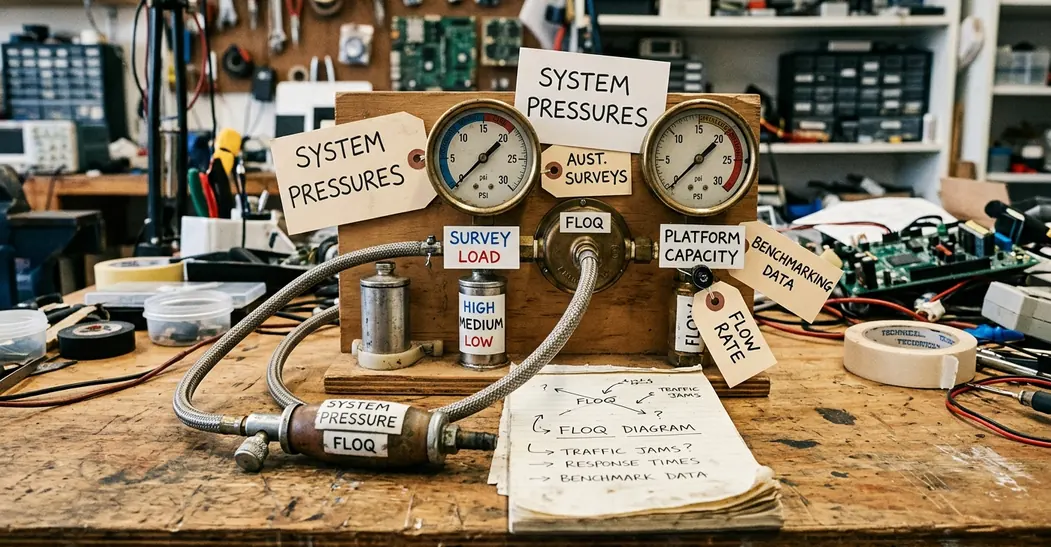
Tracking satisfaction, experience, and behavior over time provides necessary visibility. We tracked satisfaction quarterly starting in late 2022 to establish baseline metrics.
However, qualitative signal and developmental nuance rarely fit neatly into a number. Numeric scores failed to predict follow-up behavior in several key instances. To capture the reality of the team's experience, we relied on three open-text fields.
Comparative benchmarking serves a specific purpose. It should spark better questions, not close conversations.
Caution: Benchmarking alone is insufficient for developmental tracking.
7. Meaningful Change Is Slow and Non-Linear
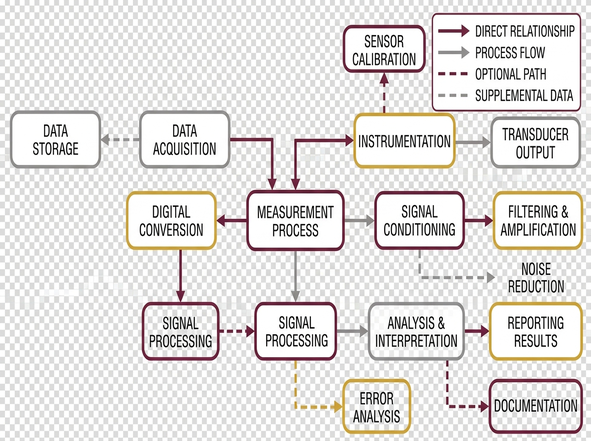
I adjusted my pace expectations after mapping regression points in longitudinal client records. Development does not move in a straight line.
Plateaus lasting roughly eight to 12 weeks are common. Setbacks were noted in two of five tracked arcs. These regressions are not failures; they are part of the developmental arc as individuals consolidate new ways of thinking. Managing expectations around this pace is critical for maintaining stakeholder support.
Pace tolerance varies by funding cycle length. Staying patient without becoming passive requires focusing on the leading indicators of vertical growth rather than demanding immediate horizontal output.
Defining the Boundaries
Developmental practice is not universally applicable. Directive approaches were tested in nine short-cycle projects under six weeks. For compliance-driven tasks or immediate crisis management, directive methods remain necessary.
We tested this starting point in five pilot teams, running lightweight measurement over about 10 weeks. The integration pace depends heavily on existing reflection habits. When deciding what to read next, consider how your current organizational structures either support or inhibit these developmental principles.